
Role-specific playbooks
Practical methods for the selected roles, built from real recurring tasks.
30-Day AI Productivity Program
Flagship engagementSelected employees learn and adopt repeatable AI methods on actual recurring tasks—with configured tools, review rules, and a measurement baseline. Not a generic company workshop.
Four focused weeks · Fixed engagement scope
MIT education · Former Amazon product leader · Longtime CTO · You work directly with Jason
Who the program is for
The Program fits organizations ready to act, often after a Readiness Review, a strong referral, or a discovery conversation.
What changes in 30 days
Practical methods for the selected roles, built from real recurring tasks.
Projects, assistants, templates, and review checklists your team keeps.
Explicit guidance for checking, approving, escalating, and protecting sensitive information.
A before-and-after view of task time, editing burden, output usefulness, and use.
Where the method breaks, and how staff recognize and handle it.
A prioritized list of what better tool use solved and what merits configuration, integration, or a build.
How roles and workflows are selected
Week-by-week program
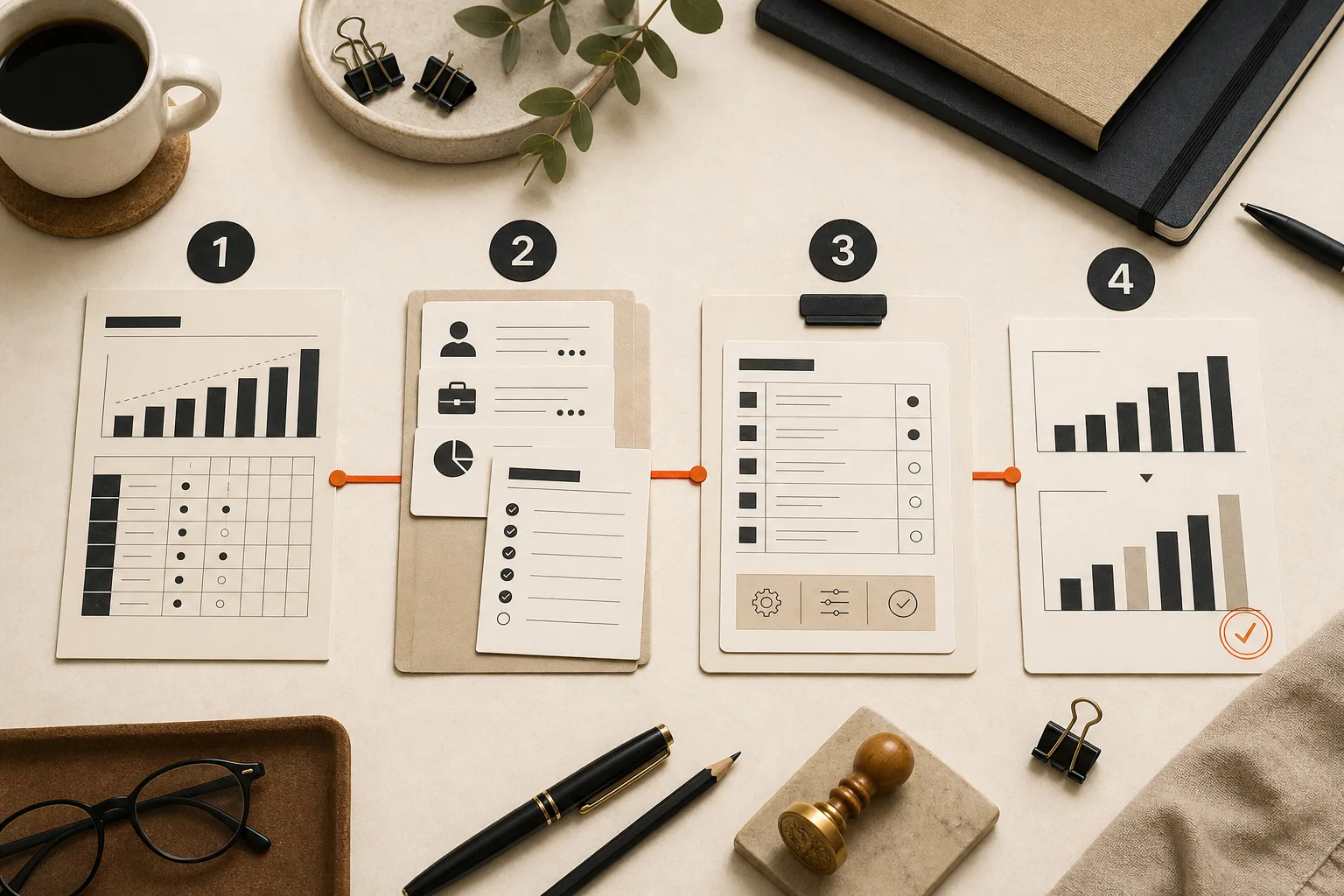
Confirm outcomes, inventory tools and licenses, select roles and recurring tasks, and establish current time, quality, and review burden.
Build instructions, examples, and review rubrics; test ChatGPT, Claude, voice, browser, or suite features on real work; identify failure modes.
Configure projects, assistants, templates, and checklists; define human review and escalation; train on live work.
Compare performance, assess adoption, document methods, prioritize the automation or build backlog, and deliver a leadership report.
Real-work labs
Labs use real documents, meetings, research, communication, and reports, with a person reviewing outputs. Examples vary by role.
Turn discovery notes into proposals, or compare long documents against a standard position for professional review.
Prepare sourced client or prospect briefings before calls, meetings, or proposals.
Turn spoken field or meeting notes into records, summaries, and tasks with human review.
Gather information across approved sites and portals and prepare a report, with checkpoints.
What you keep
Measurement and adoption
Compare task time, editing burden, and output usefulness against the week-1 baseline.
Assess whether the method produces reliable results across people and cases.
Track whether the selected roles actually use the configured tools on live work.
What you provide
Risks and boundaries
The goal is durable capability inside your team—methods, tools, and review rules that outlast the engagement.
Example role playbooks
Sourced prospect briefings, consistent proposal drafts, and tracked follow-up with human approval on outreach.
Voice-to-task workflows, exception routing, and document comparison with staff review.
Standardized intake and response drafting, escalation rules, and a shared knowledge assistant.
Recurring management memos assembled from existing source material, reviewed before sending.
Scope
Scope, deliverables, and a fixed price are defined in writing before the program begins.
Price is affected by
Why The Tomorrow Machine
You work directly with Jason Merkoski. The methods are built and tested on your real work, not delivered as slides. Jason combines an MIT education, early Amazon product leadership, and current hands-on work across ChatGPT, Claude, voice AI, supervised browser automation, and production systems.
That means the program can teach what is genuinely useful now and prioritize automation only where the evidence supports it.
FAQ
Training teaches concepts. This program configures tools on your real work, establishes review rules, and measures whether adoption actually improves speed, consistency, or capacity.
Not always. If roles and workflows are already chosen, you can start here. If they are not, a Readiness Review is usually the better first step.
Usually two to five selected participants. The program is deliberately focused so the team can adopt what it learns.
Role playbooks, configured projects or assistants, templates, review checklists, a before-and-after scorecard, an adoption report, and a prioritized automation backlog.
Where the systems and agreements support it. Sensitive work begins with explicit decisions about access, vendors, storage, logging, and human review.
Before and after the program
The right first step when roles and workflows have not been selected yet.
See the Readiness ReviewFor a proven process that needs configuration or supervised automation.
See the Workflow UpgradeOngoing ownership and continuity after the program ends.
See the Fractional OperatorPlan a 30-Day Program
Bring the roles and recurring work you want to improve. We will confirm fit, define the smallest useful scope, and plan the four weeks.
Free AI Strategy Conversation · No sales team · You speak directly with Jason
Prefer email? Reach Jason directly at hello@tomorrowmachine.ai.
Based in Santa Fe, New Mexico. U.S. Mountain and Pacific working hours.
Pick a time for a free 30-minute AI Strategy Conversation. Bring the business problem on your mind—you will leave with an honest point of view on where AI can create the most value, and your best next move.
What happens on the conversation
Useful to bring