
Sales
Lead response, sourced briefings, and proposal drafting with approval before outreach.
Workflow Upgrade
Configure or automate one proven workflow using existing systems, AI tools, integrations, voice, or supervised browser automation—with human approval at the appropriate points.
Scoped per workflow, based on complexity and integration
MIT education · Former Amazon product leader · Longtime CTO · You work directly with Jason
What qualifies as a good workflow
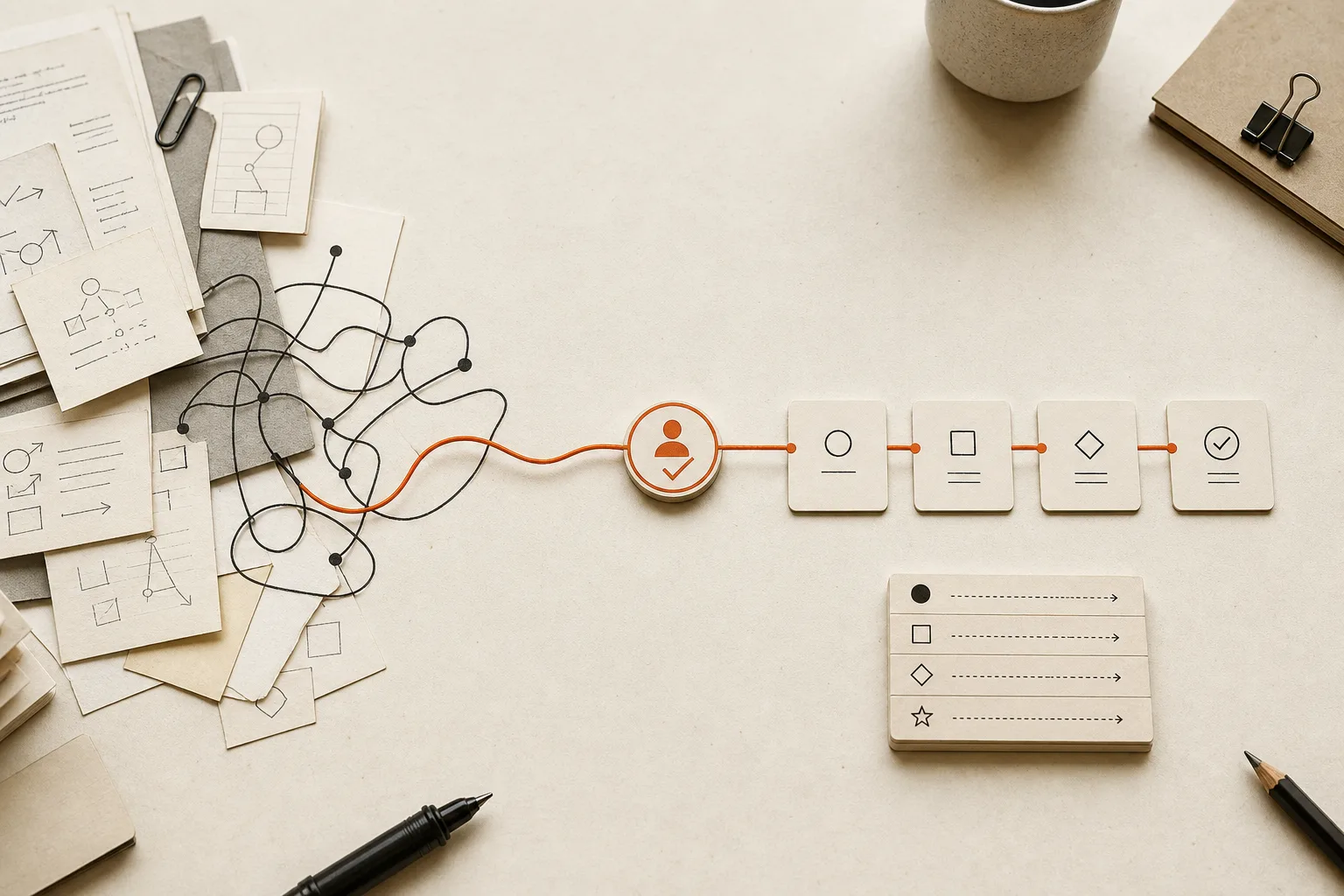
This engagement works best on a process that is already understood and worth improving.
Examples by business function
Lead response, sourced briefings, and proposal drafting with approval before outreach.
Document extraction, exception routing, and voice-to-task from meetings or the field.
Intake, standardized response drafting, and status updates with human approval.
Invoice and AR follow-up prioritization and recurring report assembly.
Pull from existing systems and produce a plain-language summary of what changed.
Supervised browser research across approved sites, assembled into a reviewed report.
Implementation layers
The engagement is not biased toward building. It uses the simplest approach that works and holds up.
Improve how a person uses ChatGPT, Claude, voice, or a suite feature on the task.
Standardize the method with instructions, examples, and review rules the team shares.
Configure assistants or connect AI outputs to CRM, task, document, or reporting systems.
Build a specialized component only when existing tools and light integration are inadequate.
What is included
What you provide
Acceptance testing
Data, permissions, and failure handling
A reliable, reviewable workflow beats an impressive demo that no one can trust in production.
Scope drivers
Scope, deliverables, and a fixed price are defined in writing before work begins.
Price is affected by
Case evidence
Outcomes are anonymized and estimated or observed where exact client metrics cannot be disclosed.
Voice summarization and task creation with human review cut call-review time by an estimated 60%.
An automated weekly report reduced a two-day cycle to under two hours of review.
Document extraction and pre-filled forms roughly halved intake prep time, with staff confirmation.
Why The Tomorrow Machine
You work directly with Jason Merkoski. Jason combines an MIT education, early Amazon product leadership, long CTO experience, and current hands-on work across AI tools, integrations, voice AI, supervised browser automation, and production systems.
That means the upgrade uses the lowest reliable layer—method, configuration, integration, or a build—rather than reaching for custom software by default.
FAQ
The best candidates repeat often, have recognizable inputs and outputs, a human owner, a measurable burden, a review point before external action, and enough volume to matter.
No. The engagement uses the lowest reliable layer—often a better method or configuration is enough. Custom building is a last resort.
Automation is supervised, reviewable, and used only where permissions and platform rules allow. Human approval is required before external or irreversible actions.
Then a Readiness Review is usually the better first step, so the workflow and its value are clear before implementation.
Around the Workflow Upgrade
When the workflow is not yet well understood or prioritized.
See the Readiness ReviewWhen several roles need repeatable methods, not just one workflow.
See the 30-Day ProgramFor ongoing ownership once workflows start compounding.
See the Fractional OperatorBring one recurring workflow
Describe the workflow, its owner, and where it slows down. We will confirm fit, choose the right implementation layer, and define acceptance criteria.
Free AI Strategy Conversation · No sales team · You speak directly with Jason
Prefer email? Reach Jason directly at hello@tomorrowmachine.ai.
Based in Santa Fe, New Mexico. U.S. Mountain and Pacific working hours.
Pick a time for a free 30-minute AI Strategy Conversation. Bring the business problem on your mind—you will leave with an honest point of view on where AI can create the most value, and your best next move.
What happens on the conversation
Useful to bring